CubeSat
A C&DH unit that can host the onboard software, with every interface carried over PC/104.
- SpaceWire
- I²C
- SPI
- CAN
- RS422
- RS485
- RS232
- GPIO


02 Platform
MA61C adapts between the communication interfaces and protocol standards of different suppliers, and presents one standard to the onboard software. That is the whole idea: integration stops being a negotiation.
Any subsystem, any supplier, through the interface it already has.
MA61C matches the device against its embedded driver database.
The node installs the driver and adapts the protocol — no user intervention.
Data is buffered, converted and forwarded to the onboard computer.
Without MA61C
With MA61C
A C&DH unit that can host the onboard software, with every interface carried over PC/104.
The same plug-and-play behaviour for larger platforms, including a MIL-STD-1553 bus.
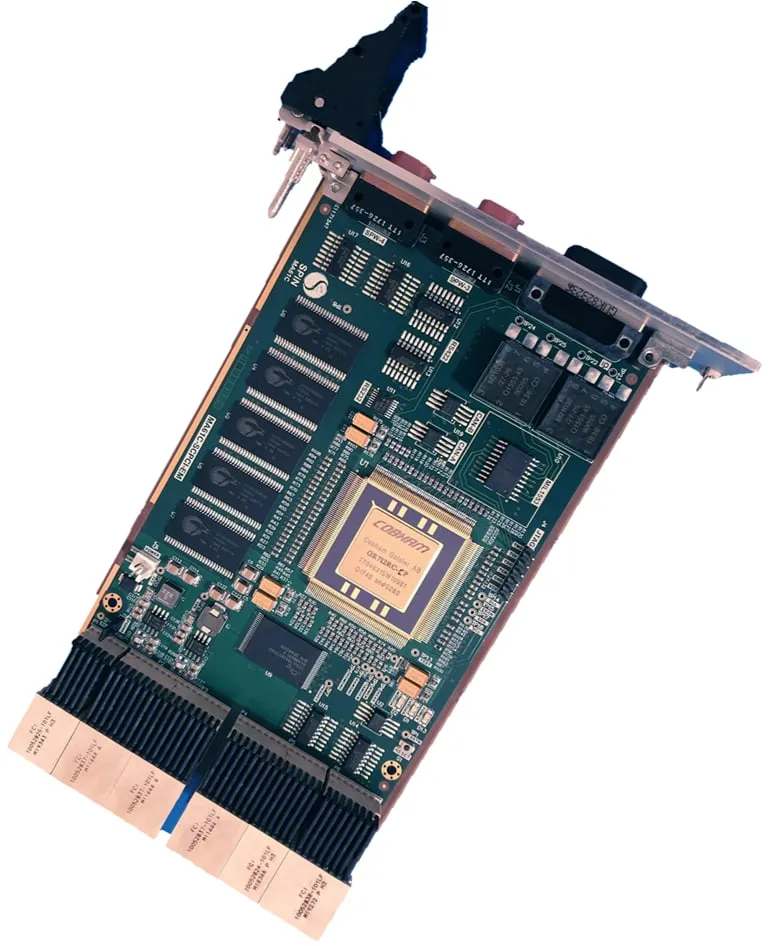
Intelligent plug and play for a cPCI serial space processing unit — the backplane ESA and the EC chose for upcoming Copernicus missions.
Why it matters
When the interface is abstracted, a component can be reused across missions instead of redesigned. Suppliers stay interchangeable, and the bill of materials stops dictating the architecture.
Next step
Send the components and the bus each one uses. We will tell you where MA61C sits, which variant fits, and what disappears from your integration plan.